The GArden

The GArden

The GArden

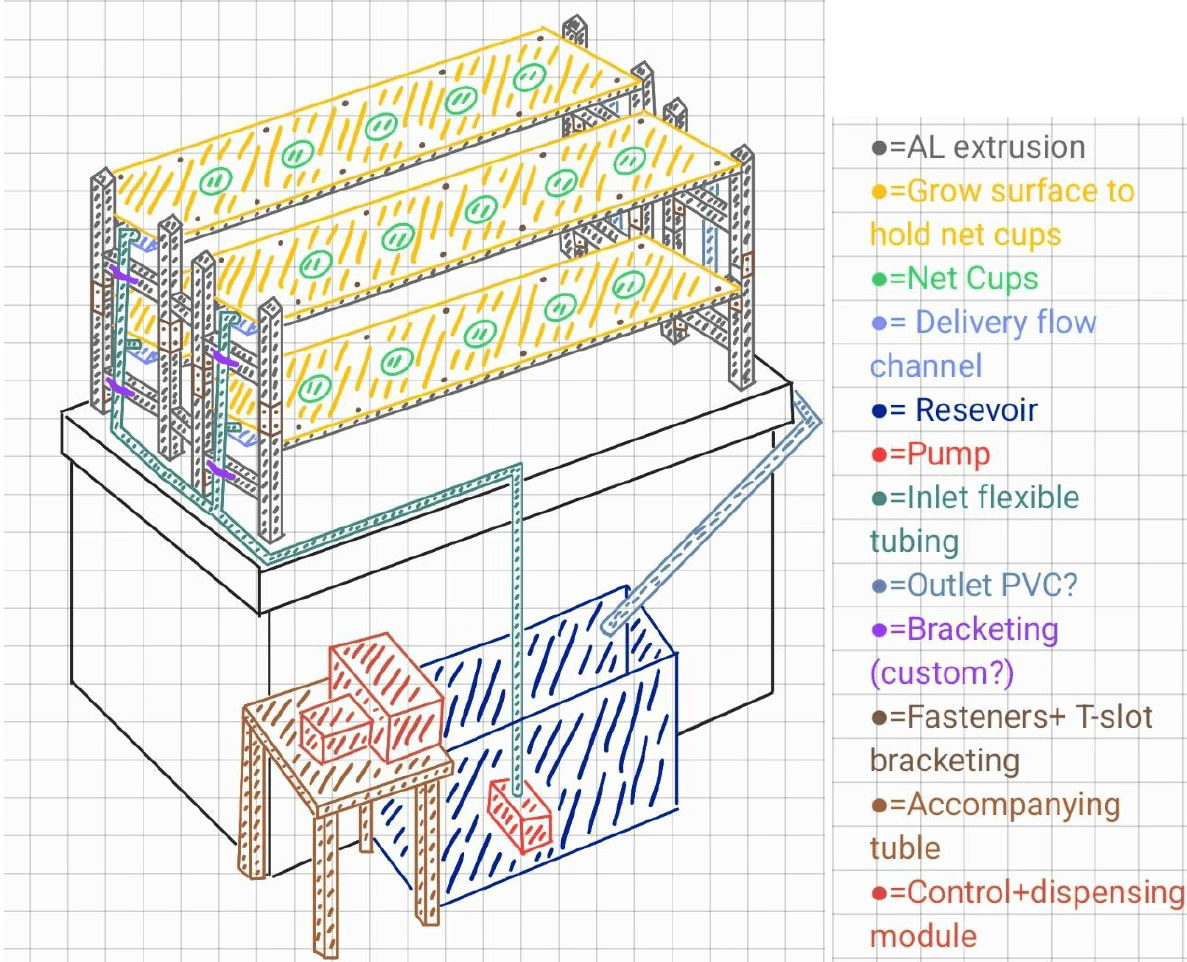
The WLF Hydroponic Garden is a modular, lab-based system designed to grow crops without soil using the Nutrient Film Technique. It features nine adjustable grow channels, custom lighting, and precise nutrient control to optimize plant growth. Built from aluminum extrusion and PVC piping, the garden is engineered for flexibility, safety, and efficiency. Automated systems monitor nutrient levels, pH, and water flow, allowing for fast experimentation, minimal water use, and consistent crop yield. Paired with a dedicated plant nursery, the system supports rapid crop turnover and year-round food production.

Year

2024 - 2025

Status

InProgress
Location

SFU SUrrey

Man

Pacific Water Research Centre Partnership

WLF Gardens has partnered with the Pacific Water Research Centre (PWRC), operating out of lab space in the SRYE building. PWRC provided lab space, complete with lab benches, cabinets, floor drainage, accessible outlet power, as well as some basic water-related lab equipment (spill kits, pH test kits, etc).

Our Why

Project Goals & Vision

Project Goals & Vision

Project Goals & Vision

Engineering Experience
Sustainability

Provide team-oriented engineering design and development opportunities for all SFU students, with a specific focus on FAS students at SFU Surrey.

Core team members work on long-term development.

Shorter “mini projects” are designed to engage younger students with single-semester design prompts.

Provide team-oriented engineering design and development opportunities for all SFU students, with a specific focus on FAS students at SFU Surrey.

Core team members work on long-term development.

Shorter “mini projects” are designed to engage younger students with single-semester design prompts.

Student Engagment
Sustainability

Foster campus-wide interest through an interactive and visible design:

Create an operationally, aesthetically, and practically interesting project visible from SFU Surrey walkways.

Host student events around planting, harvesting, and eating crops.

Teach sustainable agriculture, hydroponics, and the design process.

Foster campus-wide interest through an interactive and visible design:

Create an operationally, aesthetically, and practically interesting project visible from SFU Surrey walkways.

Host student events around planting, harvesting, and eating crops.

Teach sustainable agriculture, hydroponics, and the design process.

Practical R&D for Impact
Sustainability

Use engineering design, test engineering, and data-driven decisions to explore real-world applications:

Apply R&D to promote hydroponics as a food security solution in non-profit contexts, such as food banks and soup kitchens.

Develop educational materials and small-scale hydroponic systems to engage K–12 students in conversations about food security and technological solutions.

Use engineering design, test engineering, and data-driven decisions to explore real-world applications:

Apply R&D to promote hydroponics as a food security solution in non-profit contexts, such as food banks and soup kitchens.

Develop educational materials and small-scale hydroponic systems to engage K–12 students in conversations about food security and technological solutions.

Use engineering design, test engineering, and data-driven decisions to explore real-world applications:

Apply R&D to promote hydroponics as a food security solution in non-profit contexts, such as food banks and soup kitchens.

Develop educational materials and small-scale hydroponic systems to engage K–12 students in conversations about food security and technological solutions.

How It Works

System Overview

System Overview

System Overview

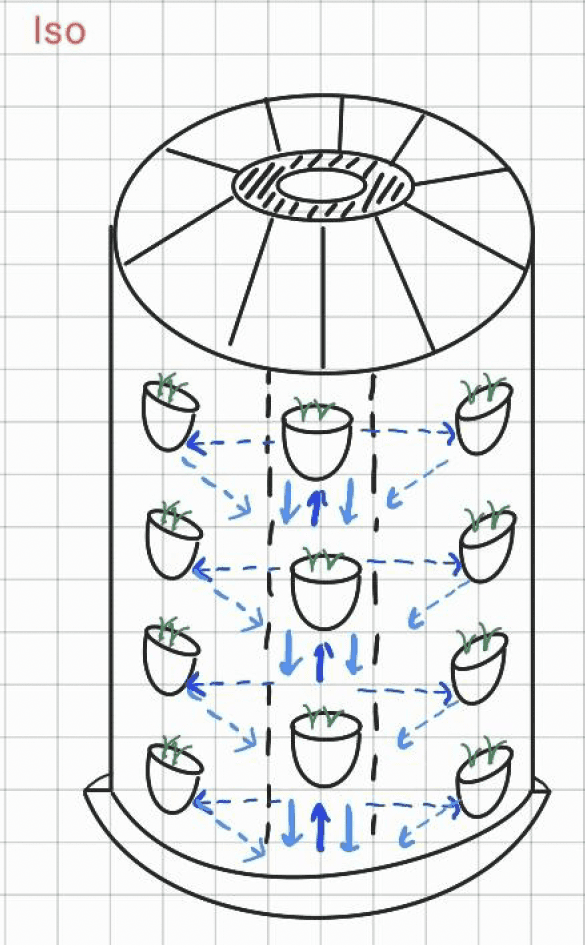
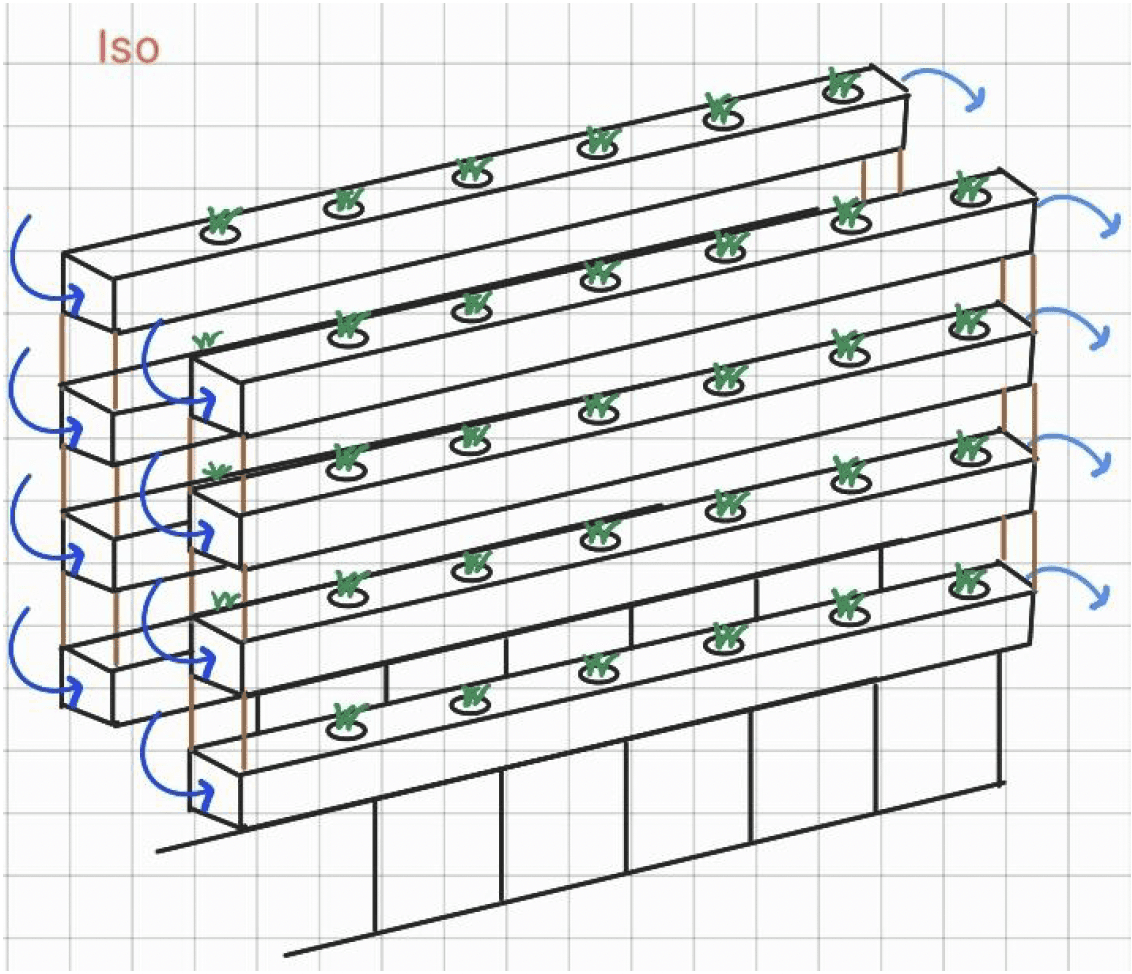
Several established hydroponic methods were considered for implementation, and evaluated on the basis of design complexity, versatility, water use/reuse, and accessibility. The Nutrient Film Technique (NFT) method was chosen for WLF Gardens. The design is complex enough to be interesting to both team members and external observers, versatile in the shape the system could take, and suitable crops, uses water recycling, is easily accessible for cleaning, maintenance, and adjustment/upgrading. The NFT method also has the long-term advantage of facilitating testing capabilities for flood and drain or drip methods.


A stacked channel architecture was chosen due to scalability and flexibility, as well as strong spatial usage and versatility. The chosen hydroponic method and system architecture were used to construct concept design drawings to inform future modelling and construction efforts.

Several established hydroponic methods were considered for implementation, and evaluated on the basis of design complexity, versatility, water use/reuse, and accessibility. The Nutrient Film Technique (NFT) method was chosen for WLF Gardens. The design is complex enough to be interesting to both team members and external observers, versatile in the shape the system could take, and suitable crops, uses water recycling, is easily accessible for cleaning, maintenance, and adjustment/upgrading. The NFT method also has the long-term advantage of facilitating testing capabilities for flood and drain or drip methods.

A stacked channel architecture was chosen due to scalability and flexibility, as well as strong spatial usage and versatility. The chosen hydroponic method and system architecture were used to construct concept design drawings to inform future modelling and construction efforts.

Design Objectives

What were prioritizing

What were prioritizing

What were prioritizing

Compact

The system must be reasonably sized to enable urban agriculture in the widest range of implementations

Compact

The system must be reasonably sized to enable urban agriculture in the widest range of implementations

Adjustable

The system must be highly adjustable to allow for the greatest possible degree of R&D freedom, and provide capacity for upgrades and mini projects

Adjustable

ADAPTABLE SYSTEMS

The system must be highly adjustable to allow for the greatest possible degree of R&D freedom, and provide capacity for upgrades and mini projects

Sustainable

The system should minimize environmental impact in both construction and operation, including selected materials and defined workflows

Scalable

The system should plausibly scale up or down to account for differing space constraints in future hydroponic garden builds

Aesthetic

system should be eye-catching and interesting, supporting its role as a tool of engagement for students and the broader community
Garden Capabilities at Launch

Initial Features

Initial Features

Initial Features

At-launch system functionalities were defined to establish the scope of work to be completed before the start of system operation:


  • Automated solution regulation: sensors read the nutrient concentration and the pH and regulate solution composition by injecting nutrients and pH up or down as appropriate

  • Artificial lighting: off-the-shelf grow lighting solutions are used to augment crop growth, using standard lighting timers

  • Reservoir level sensing: sensors read the reservoir solution level to alert when a refill is required. Rapid changes in reservoir level also trigger a shutdown procedure, assuming there is a leak

  • Drainage functionality: as a safety consideration, the circulating solution and the reservoir can be drained with or without the use of control and power systems


At-launch system functionalities were defined to establish the scope of work to be completed before the start of system operation:


  • Automated solution regulation: sensors read the nutrient concentration and the pH and regulate solution composition by injecting nutrients and pH up or down as appropriate

  • Artificial lighting: off-the-shelf grow lighting solutions are used to augment crop growth, using standard lighting timers

  • Reservoir level sensing: sensors read the reservoir solution level to alert when a refill is required. Rapid changes in reservoir level also trigger a shutdown procedure, assuming there is a leak

  • Drainage functionality: as a safety consideration, the circulating solution and the reservoir can be drained with or without the use of control and power systems


At-launch system functionalities were defined to establish the scope of work to be completed before the start of system operation:


  • Automated solution regulation: sensors read the nutrient concentration and the pH and regulate solution composition by injecting nutrients and pH up or down as appropriate

  • Artificial lighting: off-the-shelf grow lighting solutions are used to augment crop growth, using standard lighting timers

  • Reservoir level sensing: sensors read the reservoir solution level to alert when a refill is required. Rapid changes in reservoir level also trigger a shutdown procedure, assuming there is a leak

  • Drainage functionality: as a safety consideration, the circulating solution and the reservoir can be drained with or without the use of control and power systems


Designated upgrade functionalities were determined as desired operations of the garden, but were unnecessary at garden launch:


  • Advanced lighting automation

  • Circulatory fans

  • Power consumption monitoring

  • Remote access UI

Designated upgrade functionalities were determined as desired operations of the garden, but were unnecessary at garden launch:


  • Advanced lighting automation

  • Circulatory fans

  • Power consumption monitoring

  • Remote access UI

Designated upgrade functionalities were determined as desired operations of the garden, but were unnecessary at garden launch:


  • Advanced lighting automation

  • Circulatory fans

  • Power consumption monitoring

  • Remote access UI